
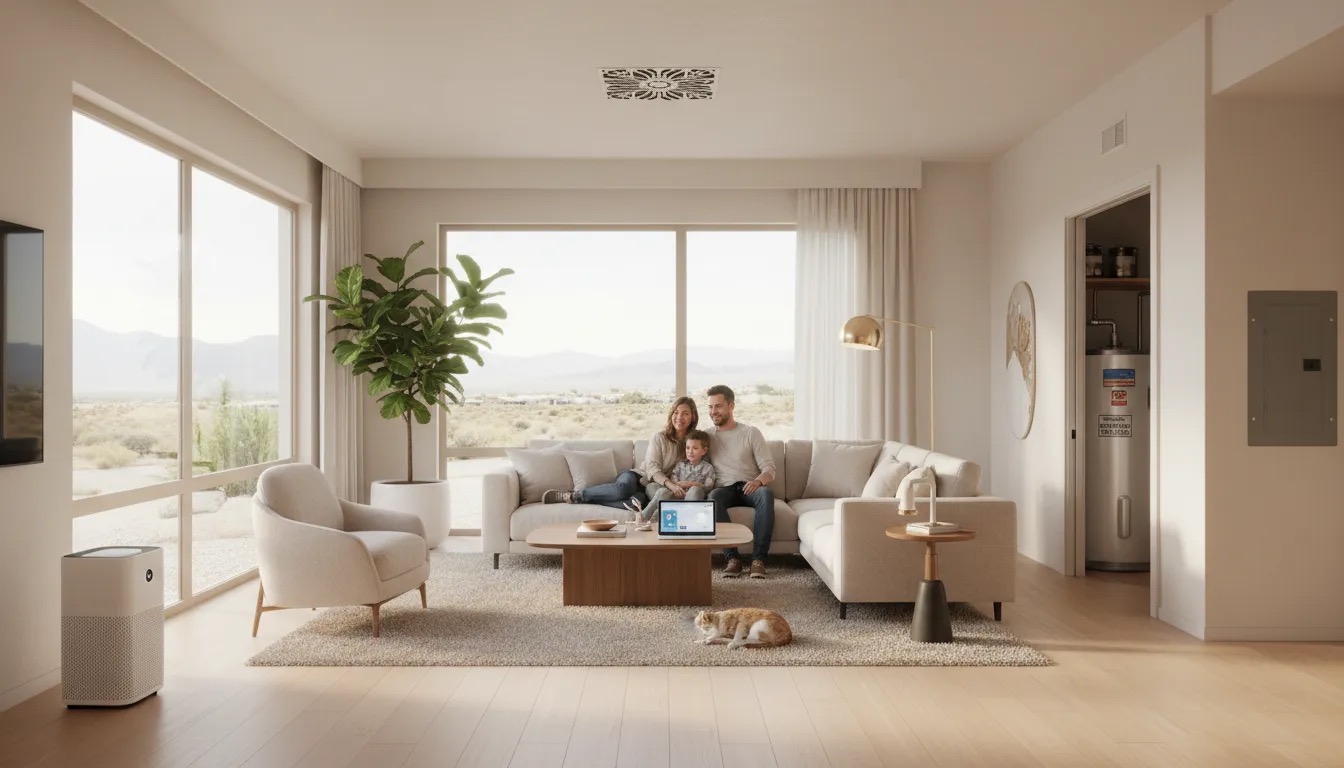
Most homebuyers are trained to evaluate what they can see.
They look at the kitchen.
They study flooring, counters, tile, fixtures, paint, and curb appeal.
They notice whether a home feels updated, dated, elegant, or in need of work.
All of that matters. But in Southern Nevada, some of the most important clues about ownership comfort are not visual at all. They live in airflow, dust patterns, venting, and the small hidden systems that determine how the home will actually feel after move-in.
That matters even more in 2026 because buyers have more reason to be selective. Local reporting on Las Vegas Realtors data showed more than 6,100 single-family homes listed without offers at the end of February 2026, well above the year before. At the same time, Freddie Mac reported the average 30-year fixed mortgage rate at 6.00% on March 5, 2026. That combination creates a healthier kind of caution. Buyers are still emotional, but they are also more deliberate.
In a market like that, a home does not only need to show well. It needs to wear well.
Desert Homes Ask Different Questions Than Homes in Softer Climates
Buyers relocating from California, the Pacific Northwest, the Midwest, or the East Coast often underestimate how different desert home ownership feels.
In Southern Nevada:
- Fine dust is a normal part of life
- Cooling systems work harder and longer
- New construction around growth corridors can affect nearby homes
- Seasonal wind events change how houses behave
- A clean-looking home can still carry hidden maintenance in the systems behind the walls
That is true in Las Vegas, Henderson, and Summerlin, but it matters for Mesquite buyers too, especially those shopping for a lower-maintenance lifestyle, a 55+ community, or a second home that may not be occupied year-round.
When people imagine simplified ownership, they often focus on square footage and HOA-managed amenities. Those are important. But the real test of low-stress living is whether the house starts creating invisible chores the moment you move in.
The Invisible Checklist Smart Buyers Carry Into Every Showing
When you walk through a home, ask yourself a different set of questions than the average buyer does:
- Does the house smell fresh when the HVAC turns on?
- Do vent covers look clean or neglected?
- Do certain rooms feel noticeably stuffier than others?
- Is there unusual dust on darker surfaces or around returns?
- Does the laundry space feel hotter than expected?
- Has the home had recent flooring, drywall, or remodeling work?
None of these signals automatically means a home is a bad buy. They simply mean the next layer of investigation is worth your attention.
This is the same principle buyers already use for roofs, windows, or water heaters. You are not chasing perfection. You are trying to identify future friction before it becomes your first-year surprise.
Why Second-Home and 55+ Buyers Should Care Even More
This part is especially relevant in communities where buyers are prioritizing simplicity, comfort, and predictability.
Many Mesquite buyers want:
- Lower-maintenance living
- Fewer unexpected expenses
- Homes that feel comfortable immediately
- Less household management overhead
That makes hidden-system issues more significant, not less. A house that looks turnkey but continually feels dusty or stale undermines the entire point of simplified ownership. The floor plan may be ideal, but the experience can still feel more demanding than expected.
Second homes create a related challenge. When a property sits closed for stretches of time, stale airflow, dust accumulation, and overlooked venting issues often become more noticeable when normal occupancy resumes. Those issues do not usually appear in listing photos, but they quickly become part of lived reality.
Ask the Questions Most Buyers Forget to Ask
A few practical questions can save a lot of regret:
- When were the air ducts last professionally cleaned?
- Has the dryer vent been serviced recently?
- Was there renovation work done in the last few years?
- Are there records of HVAC servicing?
- Has the seller noticed uneven cooling or recurring dust?
Good agents usually appreciate these questions because they show the buyer is serious. Good inspectors may also help flag signs that justify a closer look. The goal is not to create drama. It is to understand whether the home's hidden systems match its visible presentation.
A Well-Staged House Can Still Be Carrying Invisible Backlog
This is one of the hardest truths for buyers because staging is persuasive. Soft lighting, good furniture placement, fresh paint, and clean counters make it easy to assume the whole property is equally ready.
Sometimes it is.
Sometimes it is not.
A home can present beautifully while still carrying:
- Post-renovation dust
- Neglected vent pathways
- Stale airflow patterns
- A dryer system that needs attention
These are not glamorous concerns, but they shape day-to-day enjoyment far more than many decorative details do.
And because inventory is higher than it was a year ago, buyers do not need to rush past those questions. This is exactly the kind of market where careful observation creates leverage.
Budgeting for Invisible Maintenance Is Part of Buying Smart
Even if the home is a great fit, buyers should still understand what likely first-year maintenance items may cost. That way the conversation becomes practical rather than emotional.
For example, this guide to air duct cleaning costs in Las Vegas gives a useful frame of reference for budgeting and negotiation. It helps buyers decide whether a likely issue is small enough to handle after closing or important enough to address before the deal is final.
It is just as important to know that not every vent-related issue is the same. Many buyers use "vent cleaning" as a blanket phrase when the actual concern may be HVAC airflow, dryer performance, or both. This explanation of air duct cleaning versus dryer vent cleaning is valuable because it helps buyers understand what they are actually seeing.
That clarity matters. Better distinctions lead to better negotiations and better expectations.
Ready Homes Are the Homes That Feel Low-Friction
The strongest listings in 2026 are not just attractive. They feel resolved.
They smell clean rather than covered up.
Airflow feels balanced.
The house seems maintained rather than merely staged.
Small hidden systems do not send quiet warning signals.
That is what buyers should be looking for. Not flawlessness, but readiness.
And readiness is one of the most underrated forms of value in a desert market. It means the house is more likely to let you settle in, enjoy the neighborhood, and focus on your life rather than immediately inheriting a to-do list you never saw coming.
The Right House Should Be Easy to Imagine Living In
It is normal to fall for finishes. It is normal to remember the great room, the kitchen island, the patio, the light, the layout.
But in Southern Nevada, your first year in the home will be shaped just as much by what the showing did not emphasize: dust load, airflow quality, hidden maintenance, and the small system details that separate a home that photographs well from one that truly lives well.
That is why the smartest buyers now bring two checklists to a showing.
One is visual.
The other is invisible.
The invisible one is often the one that protects your peace after closing.
Posted by Alexander Gutierrez
Related Articles:
- Real Estate Investing For Beginners 6 Mistakes To Avoid
- Long Distance Moving Sacramento To Mesquite Nevada
- A Beginners Guide To Real Estate Investment
- Moving Outside Nevada Here Are The Top Cities To Consider For Your Next Home
- Creative Tips To Make Your Home More Energy Efficient
- 5 Ways To Increase The Curb Appeal Of Your Desert Home
- Mesquite Nevada Community Developments April 2022
- Energy Efficient Home Upgrades That Save Money And Increase Value